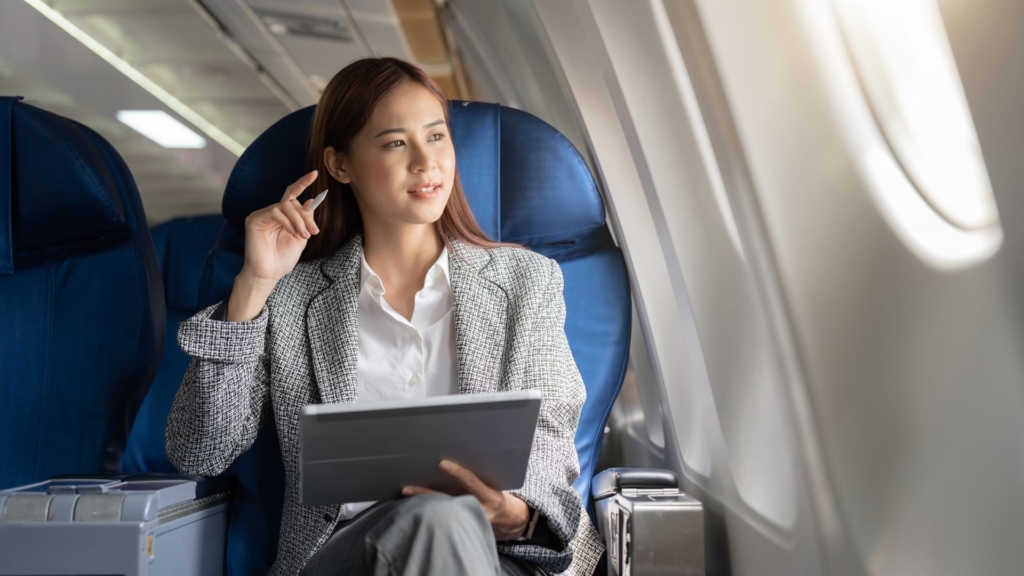
Business class is like a sealed room to many travelers. Better meals, quieter cabins, lie-flat beds, and wider seats are all obvious but monetarily unaffordable. Business class is assumed to be reserved for CEOs, celebrities, or those with large enough expense accounts to comfortably pay four-figure ticket fees.
Frequent travelers know this isn’t true.
Not because business class is cheap, but because its pricing logic is far more flexible than most people realize. Airlines sell business class seats in a system that prioritizes yield, not fairness. That system creates gaps — and those gaps are where experienced travelers operate.
The people regularly flying business class on modest incomes are not gaming the system illegally or relying on luck. They are using predictable airline behavior, structural inefficiencies, and timing advantages that casual travelers never learn.
These are not once-in-a-lifetime tricks. They are repeatable strategies used every year by people who understand how airline pricing actually works.

Hack One: Booking the “Uncomfortable” Route Airlines Struggle to Sell
One of the most reliable ways frequent travelers access business class cheaply is by booking routes airlines consistently fail to fill.
Not all business class seats are equal in airline economics. Routes that attract corporate travelers — such as New York to London or Frankfurt to Singapore — maintain high business class prices because demand is stable and predictable.
Other routes don’t.
Flights to leisure destinations, secondary cities, or places with seasonal demand swings often have surplus premium seats. Airlines would rather sell those seats cheaply than let them go empty, because an empty business class seat generates zero revenue.
Frequent travelers exploit this by targeting routes where business class demand is weak but aircraft configuration still includes premium cabins.
These routes are often:
-
Long-haul leisure destinations
-
Secondary European or Asian cities
-
Routes with strong economy demand but weak corporate travel
Airlines quietly discount business class on these routes months in advance, knowing they cannot rely on last-minute corporate bookings.
This is why experienced travelers often route themselves through unexpected hubs or cities. The goal isn’t convenience — it’s access to underperforming premium inventory.
Why Flexibility Beats Loyalty Every Time
Casual travelers are loyal to destinations. Frequent travelers are loyal to opportunity.
They choose where to go based on pricing anomalies rather than emotional preference. If business class to one city is half the price of another, they adapt the itinerary instead of paying the premium.
This mindset alone opens doors most travelers never see.
Hack Two: Using Airline Miles for Upgrades, Not Tickets
Most people misuse airline miles.
They save miles for years, hoping to redeem them for a “free” business class ticket, only to discover availability is limited, taxes are high, and dates are inflexible.
Frequent travelers rarely do this.
Instead, they use miles strategically for upgrades.
Airlines are far more willing to release upgrade inventory than full award seats because upgrades do not displace a paying customer. They simply monetize a seat that might otherwise remain empty.
This is especially effective when:
-
Purchasing premium economy tickets
-
Flying routes with large business class cabins
-
Booking during off-peak seasons
A paid premium economy ticket plus miles for an upgrade often costs less than half the price of a business class ticket purchased outright.
This tactic is commonly used on long-haul flights operated by airlines such as Lufthansa, Air France, and British Airways, where upgrade inventory is more predictable.
Why Premium Economy Is the Sweet Spot
Premium economy exists largely as an upgrade buffer.
Airlines introduced it to create a price ladder between economy and business class. That ladder is exactly what frequent travelers climb.
Premium economy tickets are often discounted heavily, especially during sales. When paired with upgrade miles, they become one of the most efficient entry points into business class.
Hack Three: Letting Airlines Upgrade You Because It’s Cheaper for Them
One of the least understood realities of airline operations is this: upgrading you can be cheaper than leaving you where you are.
When economy is oversold and business class is not, airlines face a choice. They can deny boarding and pay compensation, or they can move passengers up.
Frequent travelers position themselves to be the logical choice.
They do this by:
-
Booking flexible fares
-
Checking in early
-
Holding elite or semi-elite status
-
Traveling solo
-
Avoiding special meal requests
Upgrades are not random. They follow operational logic.
Airlines prefer to upgrade passengers who are easy to move, low risk, and unlikely to cause downstream complications.
This is why frequent travelers often end up in business class without requesting it — especially on long-haul flights where compensation costs are high.
Why Status Matters Less Than Behavior
Elite status helps, but it’s not mandatory.
What matters more is predictability. Airlines upgrade passengers who are least likely to complain, miss connections, or disrupt cabin balance.
Travelers who understand this adjust their behavior accordingly.
Hack Four: Buying Business Class Where It’s Structurally Cheaper
Business class pricing varies dramatically by point of sale.
Airlines price tickets based on local market expectations, currency strength, and regional competition. The same seat can cost thousands less depending on where it is ticketed.
Frequent travelers take advantage of this by starting their journeys in countries where premium travel is priced lower.
This is common in:
-
Southern Europe
-
Southeast Asia
-
Latin America
For example, a business class ticket originating in Europe can be significantly cheaper than the same flight starting in the United States.
Travelers will sometimes book a cheap economy flight to a foreign city, then begin their long-haul business class journey from there.
This strategy is legal, common, and built into airline pricing models.
Why Airlines Allow This
Airlines are not trying to be fair. They are trying to optimize revenue across markets.
If a traveler is willing to position themselves, airlines are happy to sell the seat.
Frequent travelers understand that geography influences price more than distance.
Why These Hacks Work Repeatedly
These strategies work because they align with airline incentives.
Airlines want:
-
High load factors
-
Minimal compensation payouts
-
Predictable cabin balance
-
Revenue optimization
Frequent travelers succeed by making themselves easy to accommodate.
They don’t fight the system. They move with it.
The Role of Timing and Seasonality
Business class demand is highly seasonal.
Peak holiday periods attract leisure travelers, not corporate ones. This creates odd pricing gaps where business class becomes more affordable relative to economy.
Frequent travelers avoid booking during high-demand corporate windows and target shoulder seasons instead.
This is why so many business class deals appear during periods casual travelers ignore.
Why Most People Never See These Opportunities
Casual travelers book when they want to travel.
Frequent travelers watch pricing for months and move when conditions align.
This difference in approach explains why business class feels inaccessible to some and routine to others.
The Myth of the “Lucky Upgrade”
Upgrades are often framed as luck.
In reality, they are the result of positioning, timing, and predictability.
People who fly business class repeatedly without paying full price are not lucky. They are prepared.
The Comfort Multiplier Effect
Once travelers experience business class, they rarely return willingly to long-haul economy.
This creates a feedback loop: the more often someone flies premium, the better they get at accessing it cheaply.
Knowledge compounds.
Why This Isn’t About Gaming the System
Nothing described here violates airline rules.
These strategies exist because airlines design pricing for flexibility, not equality.
Frequent travelers simply understand how to operate within that framework.
The Psychological Shift That Makes the Difference
The biggest barrier to flying business class cheaply is mental.
Most people assume the price is fixed. It isn’t.
Frequent travelers assume everything is negotiable through timing, routing, and structure.
That assumption changes outcomes.
The Final Truth
Flying business class without being rich is not about one perfect trick.
It’s about understanding how airlines think.
They don’t sell seats based on comfort. They sell them based on probability, demand, and risk.
Frequent travelers succeed because they align themselves with those priorities.
They fly when airlines are flexible. They route where airlines struggle. They upgrade when airlines benefit.
Business class isn’t reserved for the wealthy.
It’s reserved for the informed.

- Stop Overpaying: The Viral ‘Wearable Luggage’ Hack That Airlines Are Desperately Trying to Patch - March 29, 2026
- The ‘Bar-Seating’ Loophole: How to Skip the 2-Hour Wait and Save 15,0% at Europe’s Hottest Spots - March 29, 2026
- These Coffee Trends Are Quietly Showing Up in Cafés Worldwide - March 29, 2026