“Authentic” is one of the most overused words in travel — and one of the hardest to define.
In Europe, authenticity isn’t about places without visitors. It’s about places where daily life still outweighs tourism. Where bakeries open for locals before sunrise. Where markets feel functional, not staged. Where history hasn’t been polished into a theme park.
The continent is layered with cities that once dominated trade routes, mountain villages shaped by isolation, and coastal towns that still revolve around fishing schedules rather than cruise timetables.
These 24 destinations aren’t unknown — but they’re often overshadowed by bigger names. And once you go, you’ll likely wonder why they weren’t on your list sooner.
1. Trieste, Italy
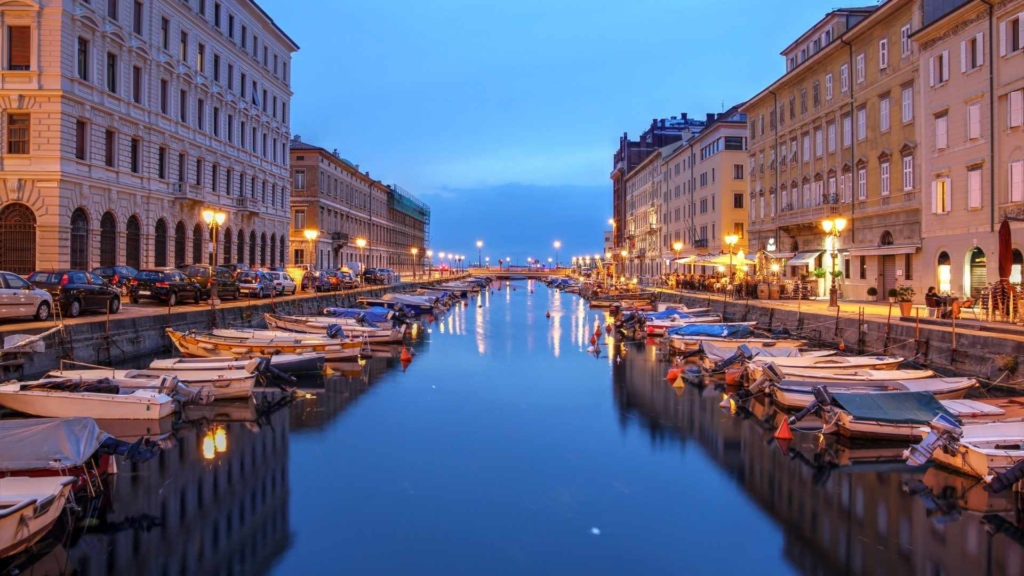
Perched near the Slovenian border, Trieste feels more Central European than stereotypically Italian. Austro-Hungarian architecture lines grand piazzas, and coffee culture runs deep — historically influenced by its role as a major port in the Habsburg Empire.
Piazza Unità d’Italia faces the Adriatic, giving the city an open, windswept elegance. It’s a place where literary cafés coexist with sea breezes and layered identities.
2. Gjirokastër, Albania
A UNESCO World Heritage Site, Gjirokastër is known for its stone houses with slate roofs and dramatic hillside setting.
Ottoman-era architecture dominates the old town, and a massive hilltop fortress overlooks the valley below. Unlike Mediterranean resort towns, Gjirokastër feels rooted in its past rather than redesigned for tourism.
3. Braga, Portugal
While Lisbon and Porto attract attention, Braga in northern Portugal remains calmer and deeply historic.
Often called one of Portugal’s oldest cities, Braga is known for baroque churches, lively plazas, and the Bom Jesus do Monte sanctuary perched above town.
It feels lived-in, not curated.

4. Český Krumlov, Czech Republic
Yes, it’s known — but it still feels magical.
Wrapped in a bend of the Vltava River, Český Krumlov’s castle towers over a compact old town of Renaissance and Baroque buildings. Outside peak hours, the town becomes quiet and atmospheric.
It’s Prague’s quieter cousin — without the nonstop crowd flow.
5. Kotor (Beyond the Cruise Hours), Montenegro
Kotor’s fortified walls climb steeply up limestone mountains. Medieval lanes twist through the old town.
Cruise ships arrive and depart, but in early morning or late evening, Kotor returns to its original scale — intimate, stone-built, and framed by fjord-like scenery.
Stay overnight and you’ll see its quieter face.
6. Sibiu, Romania
Transylvania is far more than folklore.
Sibiu’s pastel houses, fortified walls, and expansive central square feel distinctly Central European. Its “eyelid” dormer windows — roof openings that resemble eyes — give the town character.
The Carpathian Mountains rise nearby, offering a rural counterpoint.
7. Lecce, Italy
Often called the “Florence of the South,” Lecce in Puglia is known for ornate Baroque architecture carved from soft local limestone.
Church façades are intricately detailed, yet the city remains compact and walkable. Life unfolds at a slower pace than in Italy’s northern cities.
It’s architectural drama without overwhelming crowds.
8. Colmar, France
In Alsace, Colmar blends French and German influences in half-timbered houses and canal-lined streets.
While it draws visitors, it remains smaller and calmer than Strasbourg. Regional wines and seasonal markets add depth beyond aesthetics.
It feels personal rather than monumental.
9. Ljubljana, Slovenia
Slovenia’s capital is compact, green, and human-scaled.
The Ljubljanica River winds through the city center, crossed by distinctive bridges. Outdoor cafés spill into pedestrian-only streets.
It offers Central European architecture without the heavy tourism footprint of Vienna or Budapest.
10. San Sebastián (Beyond the Pintxos Hype), Spain
San Sebastián is known for its food scene — and rightly so — but beyond the pintxos bars lies a coastal city with strong Basque identity.
La Concha beach curves elegantly along the bay, and Mount Urgull rises above the old town.
The city balances culinary prestige with everyday life.
11. Valletta, Malta
Malta’s fortified capital sits on a peninsula facing two deep harbors.
Built by the Knights of St. John in the 16th century, Valletta’s grid layout and limestone buildings glow golden at sunset.
Despite cruise traffic, much of the city still functions as a residential and administrative center.
12. Ghent, Belgium
Often overshadowed by Bruges and Brussels, Ghent combines canals, medieval towers, and a lively university presence.
Its Gravensteen castle and St. Bavo’s Cathedral anchor the skyline, but the city feels less packaged than its Belgian counterparts.
13. Tórshavn, Faroe Islands
Capital of the Faroe Islands, Tórshavn is small but culturally distinct.
Grass-roofed houses and North Atlantic winds define its setting. Fishing traditions remain strong, and the town feels geographically and culturally remote.
It’s Europe — but not the Europe most travelers imagine.
14. Matera, Italy
Matera’s Sassi districts consist of cave dwellings carved into limestone ravines.
Some dwellings date back thousands of years. After mid-20th-century abandonment, the area was revitalized, yet much of its ancient structure remains intact.
Walking through Matera feels like stepping into layered time.

15. Mostar, Bosnia and Herzegovina
Mostar’s Stari Most (Old Bridge) spans the Neretva River in a graceful arc.
Rebuilt after the 1990s conflict, it symbolizes resilience. Ottoman influences shape the old bazaar district, and minarets punctuate the skyline.
It’s compact, poignant, and visually striking.
16. Piran, Slovenia
On Slovenia’s small Adriatic coastline, Piran sits at the tip of a narrow peninsula.
Venetian architecture dominates, reflecting centuries of influence. The town is car-free in its historic core, which preserves its atmosphere.
It’s Mediterranean without mass commercialization.
17. Girona, Spain
North of Barcelona, Girona’s medieval walls and Jewish Quarter offer deep historical layers.
Colorful houses line the Onyar River, and the cathedral rises dramatically above stone steps.
It’s Catalonia with fewer crowds and more breathing room.
18. Annecy, France
Annecy’s canals and alpine backdrop create postcard scenes.
Lake Annecy’s clear water and surrounding mountains add outdoor appeal. While not unknown, it still feels livable and grounded outside peak summer weekends.
19. Veliko Tarnovo, Bulgaria
Once the capital of the Second Bulgarian Empire, Veliko Tarnovo spreads across hills above the Yantra River.
The restored Tsarevets Fortress crowns the ridge, and houses cling to slopes in dramatic fashion.
It’s historic without feeling staged.
20. Rovinj, Croatia
On the Istrian Peninsula, Rovinj rises from the sea in pastel layers.
Narrow streets spiral upward to St. Euphemia’s Church. Fishing boats still line the harbor.
It feels more intimate than Dubrovnik, yet equally photogenic.
21. Bergen (Outside Peak Cruise Hours), Norway
Bergen’s colorful Bryggen wharf reflects its Hanseatic trading history.
While cruise ships dock regularly, mornings and evenings reveal a quieter city framed by mountains and fjords.
It’s a gateway to Norway’s dramatic landscapes — but a characterful city in its own right.
22. Nafplio, Greece
Before Athens became capital, Nafplio held the title.
Its neoclassical architecture, seaside promenade, and hilltop fortress create a layered coastal town with historical depth.
It’s more understated than Greek island hotspots.
23. Utrecht, Netherlands
Often overshadowed by Amsterdam, Utrecht offers canals — but at street level, with wharf cellars converted into cafés.
A university city, it feels youthful and lived-in. The Dom Tower anchors the skyline.
It’s Dutch charm without Amsterdam’s intensity.
24. Innsbruck, Austria
Innsbruck sits at the intersection of alpine peaks and pastel townhouses.
The Golden Roof and medieval center contrast with dramatic mountain backdrops. Ski culture and university energy coexist.
It’s an alpine city that feels active year-round.
What Makes a Place Feel Authentic?
It’s rarely isolation.
It’s continuity.
When markets serve residents first.
When architecture reflects centuries of adaptation.
When language, food, and ritual remain visible in daily life.
When the place feels like it would exist even without visitors.
These 24 destinations each offer that continuity in different forms — mountain, coastal, medieval, or urban.
The Real Takeaway
Europe doesn’t run out of authenticity.
It just hides it behind louder headlines.
Look beyond the capital cities. Wander one train stop further. Stay overnight where others day-trip. Walk side streets after sunset.
You may not find a place untouched by tourism.
But you’ll find places that still belong to themselves.
And those are the ones you’ll wish you had found sooner.

- 24 Authentic European Destinations You’ll Wish You Found Sooner - February 23, 2026
- The GOAT Travel Hacks for Stress-Free Trips in Uncertain Times - February 23, 2026
- Alpine Lakes Look Inviting For Nudist — But They Don’t Warm Up Like You Think - February 23, 2026